Why Many Riders Think Beyond a Standard Folding Bike
A classic folding bike offers clear advantages. It saves space, is easier to take into an apartment, office, car, or train, and fits better into cramped living spaces than many other bicycles. For short city trips, this is often perfectly sufficient.
However, typical limitations of simpler models quickly become apparent in daily use:
-
poor pavement and uneven roads feel noticeably harsher
-
small wheels can feel less confident at higher speeds
-
simple brakes quickly reach their limits in wet conditions or dense city traffic
-
short distances are fine, but longer rides often become more strenuous
This is precisely why many riders are not just looking for another folding bike, but a bicycle that can do more in everyday life. A gravel folding bike is aimed at people who want flexibility without completely sacrificing ride feel for the folding mechanism.
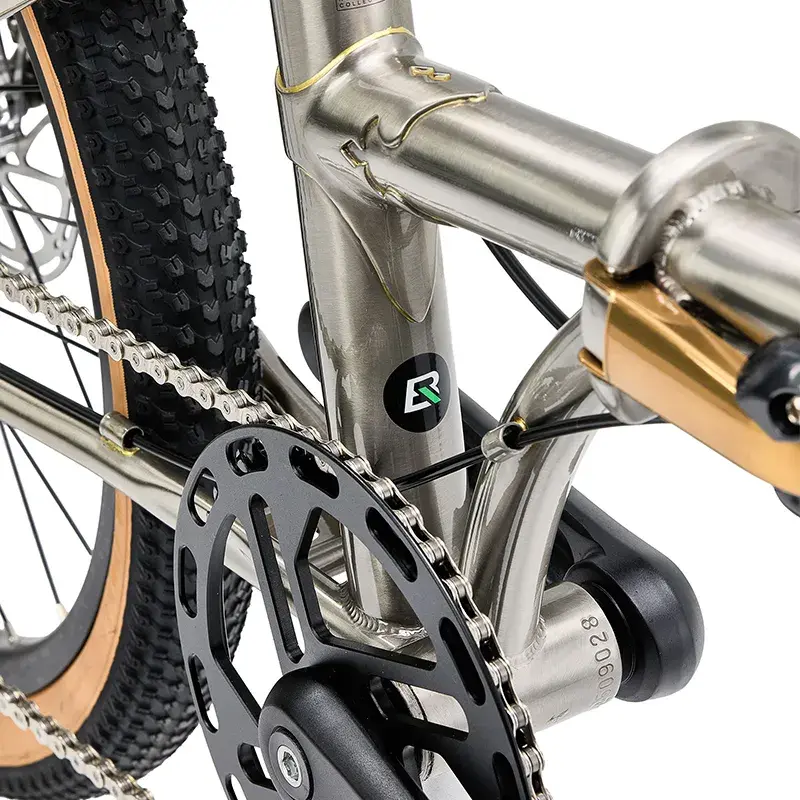
The ROCKBROS Gravis 20-inch Gravel Folding Bike clearly illustrates where this category is heading: away from a purely compact concept, towards a folding bike that aims to be more stable, comfortable, and versatile in everyday life. ROCKBROS positions the model with a 4130 chromoly steel frame, 4130 chromoly steel fork, 20-inch gravel tires, hydraulic disc brakes, and a compact folding concept as a versatile bike for city, commuting, and mixed terrains.
What Differentiates a Gravel Folding Bike from a Regular Folding Bike
Not every folding bike is automatically a true gravel folding bike. The difference lies less in the label than in the overall design.
A gravel folding bike is designed to cover more than just the way to the train station or the office. It should also perform better on rougher roads, connecting paths, uneven asphalt, and longer distances. Several factors contribute to this:
-
a more stable frame
-
wider tires
-
a drivetrain tuned for everyday use
-
stronger brakes
-
a folding mechanism that doesn't excessively compromise ride quality
Thus, such a model replaces neither a full-fledged road bike nor a mountain bike for demanding terrain. Rather, it positions itself in between: as a foldable bicycle for riders who want to combine city, transport, and versatility.
Steel Frame Instead of Just a Compact Solution
Especially with higher-quality models, the frame is much more than just a technical detail. A gravel folding bike with a steel frame appeals to riders who are not looking for just any folding bike, but a bicycle with more substance.
The Gravis combines a 20" 4130 Chromoly Steel Folding Frame, a 4130 Chromoly Steel Fork, and a classic LUG-muff construction with copper brazing. This design represents a unique combination of stability, durability, and classic steel frame aesthetics.
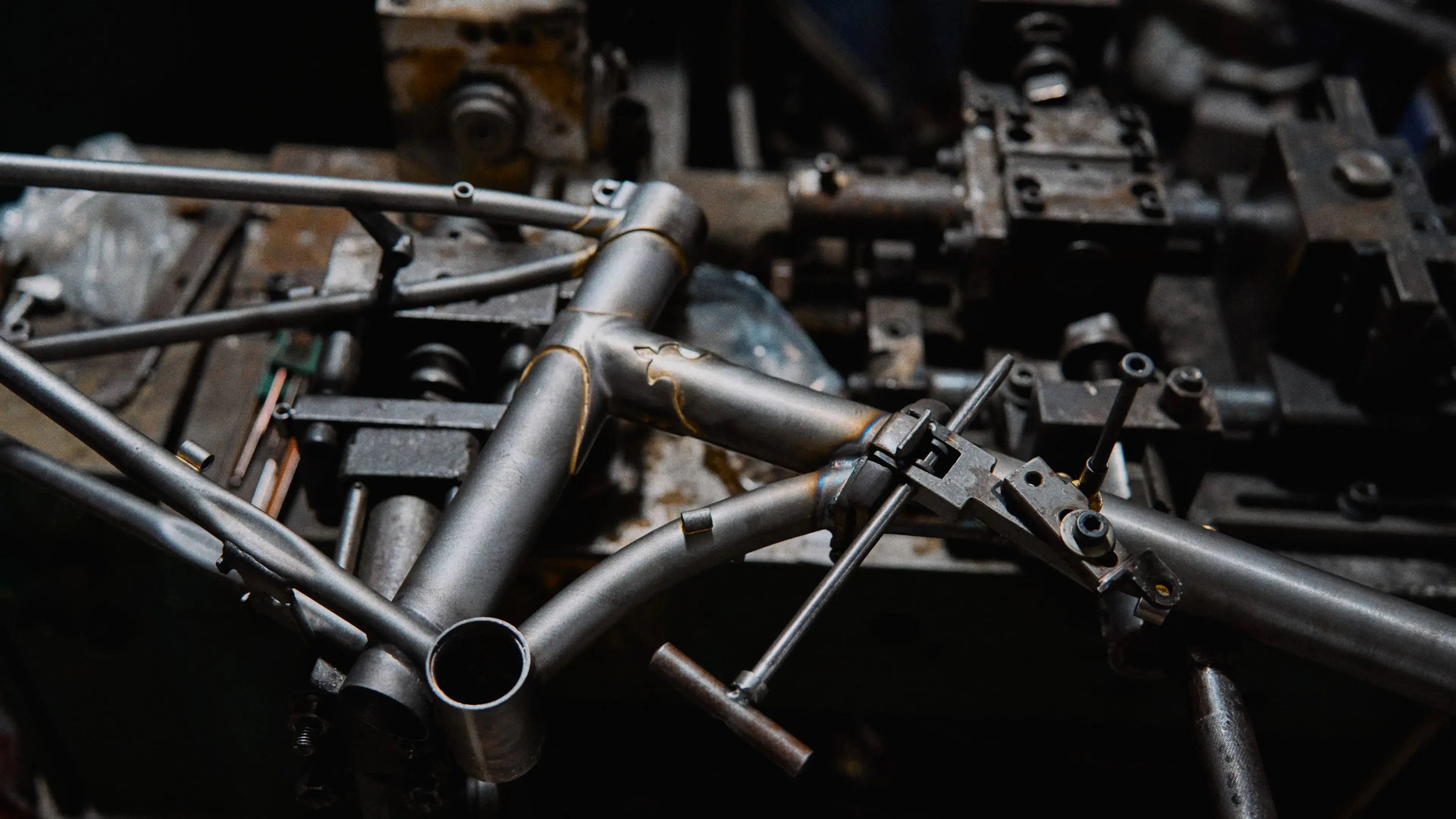
A 4130 chromoly steel frame offers exactly the characteristics that many riders appreciate in everyday life: a smoother ride, high stability, and confident performance on asphalt as well as uneven surfaces.
Then there's the emotional aspect: a classic lugged steel frame looks more distinctive than many interchangeable aluminum constructions. Anyone who just wants a bicycle as cheaply as possible and only for a few minutes a day doesn't necessarily need this type of construction. But those who ride regularly, value material character, and want to keep their bike longer often view this difference differently.
Riding Comfort: Why Small Wheels Don't Dictate Everything
Many automatically associate small wheels with less comfort. It's not that simple. Of course, a 20-inch folding bike rides differently than a large gravel bike or a classic trekking bike. However, the ride feel is not solely determined by wheel size.
Key factors include:
-
tire width
-
air volume
-
frame material
-
geometry
-
handlebar and seating position
-
the overall setup of the bike
The Gravis combines its steel frame with CST 20×1.95 tires. This exact combination of a robust frame, wider tire format, and everyday-oriented design sets it apart from many simple folding bikes and supports a safe, comfortable riding experience on asphalt and varying surfaces.
It's not about exactly copying a large gravel bike. It's about tuning a small, foldable bicycle so that the ride remains not only practical but also enjoyable.
Why Equipment Matters for a Gravel Folding Bike
Many product pages vaguely speak of performance without getting specific. However, for buyers, what's actually installed is crucial. For a gravel folding bike, the equipment should match its intended use: suitable for everyday, robust, easy to operate, and flexible enough for city traffic, light climbs, and mixed paths.
Drivetrain and Shifting
The Gravis uses a MicroShift Advent 9-speed drivetrain. The setup includes a MicroShift Advent M6290 9-Speed Shifter, a MicroShift Advent M6195S 9-Speed Rear Derailleur, a 170 mm Aluminum 44T Crankset, and an 11–34T 9-Speed Cassette. The tuning is very well suited for everyday use, commuting, and moderate climbs, while remaining pleasantly uncomplicated.
Ultimately, what matters is not whether a system sounds particularly prestigious, but whether it is sensibly tuned for real-world use. This is precisely the case here.
Brakes
A real advantage of the Gravis is the PRO CNC Hydraulic Disc Brakes. Hydraulic disc brakes offer powerful, consistent braking performance and are a clear advantage over simpler braking systems, especially in city traffic, on wet roads, or on changing surfaces.
Tires and Everyday Suitability
Wider tires are a central factor for comfort and off-road capability. The Gravis uses CST 20×1.95 tires and is explicitly described on the product page as suitable for smooth asphalt as well as uneven terrain. This is an important difference between a simple folding bike and a serious gravel folding bike.
Who a Gravel Folding Bike is Particularly Interesting For
Such a model doesn't suit everyone. For some riders, a regular folding bike, an e-bike, or a classic trekking bike is a better solution. A gravel folding bike is particularly interesting for people who have several requirements simultaneously.
1. Commuters in City Traffic
Anyone who commutes to work daily, takes their bike on the train, or needs to store it in the office benefits from the flexibility of a folding bike. If there are also rough roads, construction detours, or longer stretches of road, a gravel-oriented setup quickly becomes more attractive.
2. Riders with Limited Space
In small apartments, narrow hallways, or shared living situations, a compact bicycle is often more practical than a large bike. Anyone who wants to load their bike into the trunk, transport it in a car, or store it in a corner of their home will look at the topic of folding differently. ROCKBROS emphasizes this very point with the Gravis: the bike is easy to fold and fits perfectly into the trunk or tight storage spaces.
3. Riders for Weekday and Weekend Use
Anyone who rides short distances in the city during the week and occasionally wants to go to the countryside on the weekend often doesn't need a specialized bike, but a true all-round bicycle. This is precisely one of the strongest applications for a gravel folding bike.
4. Riders with an Appreciation for Material and Character
Not everyone wants an anonymous mass-produced bike. Some buyers consciously pay attention to design, frame feel, and details. They are not looking for a mere means of transport, but a bicycle that is practical in everyday life and still has personality. A classic lugged steel frame really shines in this target group.
Transport, Train, Trunk, and Everyday Life: The Great Advantage of the Folding Concept
A significant appeal of a folding bike lies not only in the ride itself, but in life with the bike before and after. A good gravel folding bike doesn't have to have the smallest folded dimensions on the market. What's crucial is whether it performs convincingly in real everyday life.
Typical questions include:
-
Can the bike be folded quickly?
-
Is the folding mechanism intuitive?
-
Does it fit in the trunk?
-
Is transport on a train or subway more realistic?
-
Does it make it easier to get into an apartment, office, or basement?
-
Is the balance between riding stability and portability really sufficient?
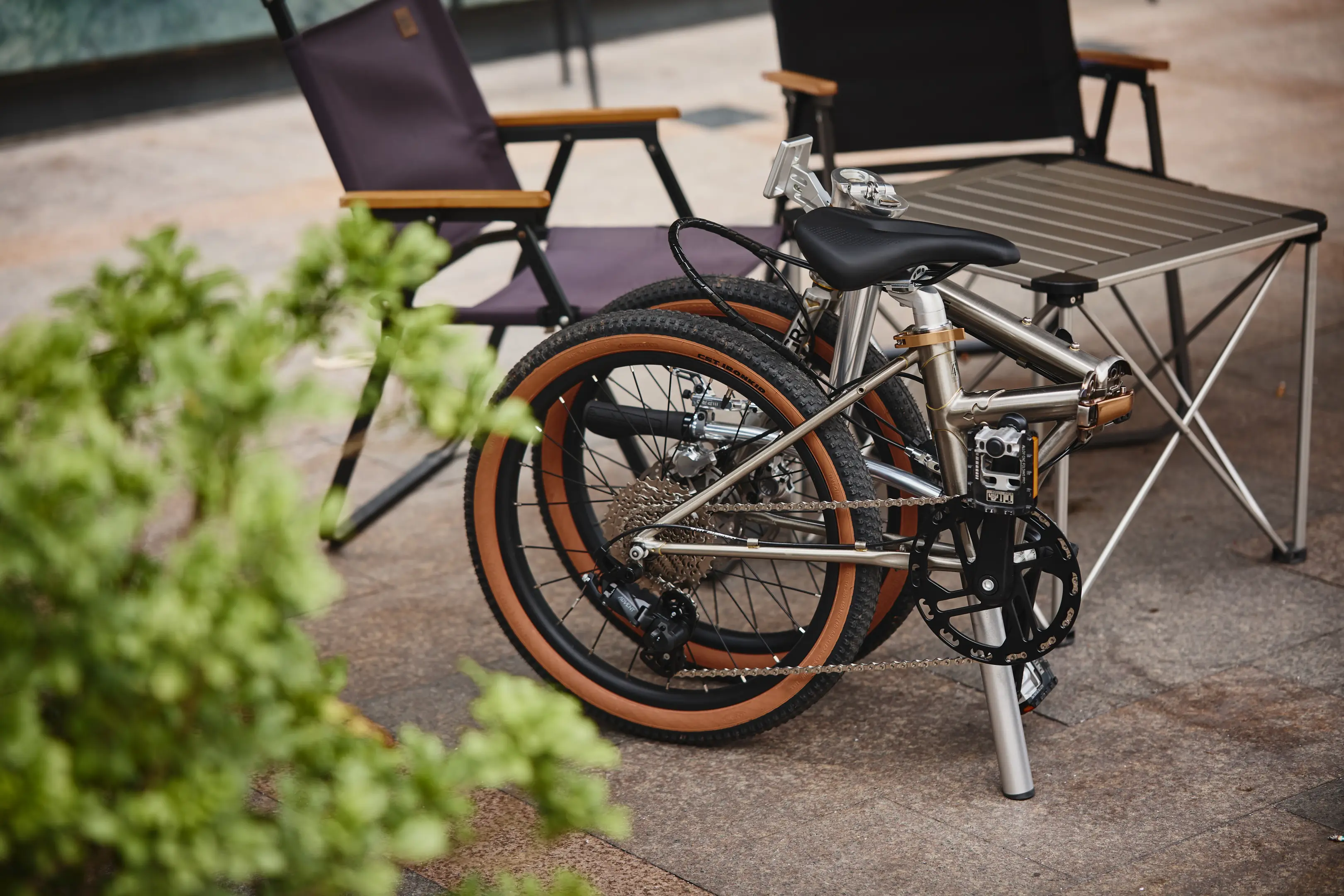
This is a real advantage, especially for commuters and city dwellers. Anyone who frequently moves between home, street, platform, and workplace knows how important these points are. With the Gravis, ROCKBROS clearly emphasizes this everyday aspect: with a weight of approx. 11.7 kg, the model is intended to offer a balance between stiffness and portability and be easy to fold.
Can a Gravel Folding Bike Also Convince on Gravel and Light Trails?
Yes, but with realistic expectations. A gravel folding bike is not a mountain bike and not a substitute for aggressive off-road bikes. Even a classic gravel bike with larger wheels has its own advantages on long gravel tours.
Nevertheless, there are many scenarios where a foldable gravel bike makes a lot of sense:
-
city traffic with poor surfaces
-
connecting paths in the surrounding area
-
park and forest trails
-
short to medium gravel sections
-
relaxed weekend rides
-
combined routes of asphalt and loose ground
This is precisely where its strength lies. With a steel frame, 20-inch tires in CST 20×1.95 format, and a stable overall design, the Gravis is clearly designed for versatility and feels equally at home on asphalt and uneven terrain.
Gravel Folding Bike or Regular Gravel Bike?
Many buyers ask this question. The short answer: It depends on your priorities.
A classic gravel bike is usually the better choice if you're looking for long distances, sportier riding, and maximum smooth running. A gravel folding bike, on the other hand, excels where transport, space, and everyday usability play a big role.
A regular gravel bike doesn't easily fit into every hallway, every trunk, or every daily mobility routine. A folding bike makes many things easier here. But you have to accept that it remains a compromise. The only difference is: with a good model, this compromise feels significantly smaller.
How it Differentiates Itself from Brompton, Vello, E-Bikes, and Other Categories
In the market, high-quality folding bikes are often quickly compared to Brompton. This is understandable because Brompton has strongly shaped the compact folding bike segment. Search queries for sportier premium folders also show that many buyers today expect more versatility than before.
In addition, there are models like the Vello Gravel and other concepts that show that interest in sportier folding bikes is growing. At the same time, some buyers also compare a gravel folding bike with an e-bike, a trekking bike, a road bike, or a mountain bike.
The distinction is important:
-
Compared to an e-bike, a non-motorized folding bike offers less weight, less complexity, and often less maintenance.
-
Compared to a road bike, it offers significantly more everyday usability.
-
Compared to trekking or city bikes, it scores points for transportability.
-
Compared to a pure folding bike, it usually offers a better ride feel and better reserves on mixed surfaces.
What Buyers Should Realistically Consider
A gravel folding bike is not automatically the best choice for everyone. Frankly, there are also limitations.
-
If you're looking for the absolute smallest folded size, you might find more compact solutions.
-
If you only want the lowest price, you'll find it with simpler folding bikes.
-
If you regularly ride very demanding terrain, you're more likely to choose a mountain bike.
-
If you're looking for maximum speed, a road bike or classic gravel bike is often a better choice.
Its strength lies not in extremism, but in balance. That's precisely why this category becomes interesting for many riders in the first place.
With the Gravis, two practical points are added: The bike weighs 11.7 kg and, according to the product page, has a maximum total weight limit of 100 kg for the bike, rider, and luggage combined. This is an important guideline for many everyday and commuting scenarios.
Conclusion: Is a Gravel Folding Bike Worth It?
Yes, for the right target group, a gravel folding bike can be very worthwhile.
If you're only looking for the smallest, cheapest, or simplest folding bike, there are other options. But if you're looking for a foldable gravel bike that can do more in city traffic, on the train, in the car, on bad roads, and on light gravel sections than a simple folding bike, this category is highly interesting.
It becomes particularly exciting for riders who:
-
want more comfort than with many simple folding bikes
-
value a certain off-road capability in the light to moderate range
-
are looking for a bike for everyday use and weekend tours
-
need flexibility for trunk, train, and storage space
-
appreciate design, material character, and a harmonious overall feel
The ROCKBROS Gravis makes a convincing impression here. It combines a 4130 chromoly steel frame, a 4130 chromoly steel fork, a classic LUG-muff construction with copper brazing, a MicroShift Advent 9-speed drivetrain, 11–34T cassette, 170 mm 44T crank, PRO CNC Hydraulic Disc Brakes, CST 20×1.95 tires, and a compact folding concept in a setup that is clearly designed for everyday use, comfort, and versatility.
A good gravel folding bike doesn't aim to be the most extreme bike in just one discipline. It wants to be a convincing bicycle for real life: practical when folded, pleasant to ride, and versatile enough for much more than just the last 800 meters to the office.
FAQ
What drivetrain does the Gravis Gravel Folding Bike have?
The Gravis is equipped with a MicroShift Advent M6290 9-Speed Shifter, a MicroShift Advent M6195S 9-Speed Rear Derailleur, an 11–34T 9-Speed Cassette, and a 170 mm Aluminum 44T Crankset. The setup is tuned for everyday use and also supports moderate climbs.
Does the Gravis have hydraulic disc brakes?
Yes. The Gravis is equipped with PRO CNC Hydraulic Disc Brakes. The hydraulic disc brakes provide powerful and consistent braking performance and offer increased control, especially in wet conditions, city traffic, and on changing surfaces.
How much does the Gravis weigh, and what is its weight limit?
The Gravis weighs approximately 11.7 kg. The maximum total weight limit is 100 kg for the bike, rider, and luggage combined.
How are warranty and return policy handled?
The Gravis comes with a 2-year warranty. Additionally, there is a 14-day return policy without stating reasons.